Case study · Side project

Juice Bros

The problem

Juice Bros is a pickleball media brand with a podcast. It needed a website, and I'm the only engineer on it.

That made scope the problem: a deliberately tight MVP that one person could ship, with content structured so the site could grow without a CMS.

What I did

I scoped a deliberately tight MVP, chose the stack and built the site. I integrated the podcast's YouTube feed and a Beehiiv newsletter.

On top of that I built a suite of free web tools for pickleball players, the Player tools below.
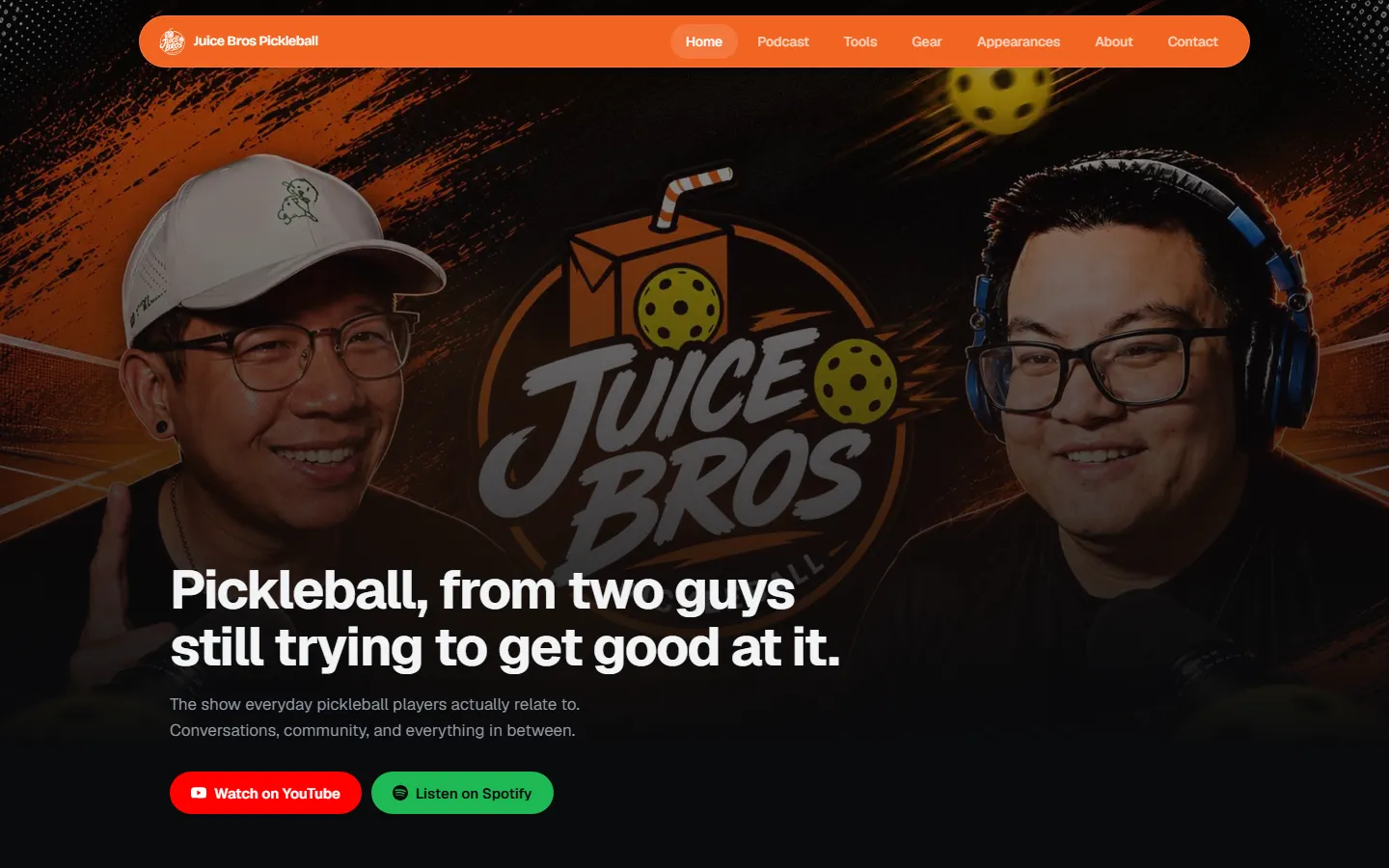
The Juice Bros home page on desktop: the two hosts either side of the logo, the headline 'Pickleball, from two guys still trying to get good at it', and Watch on YouTube and Listen on Spotify buttons.
Desktop width
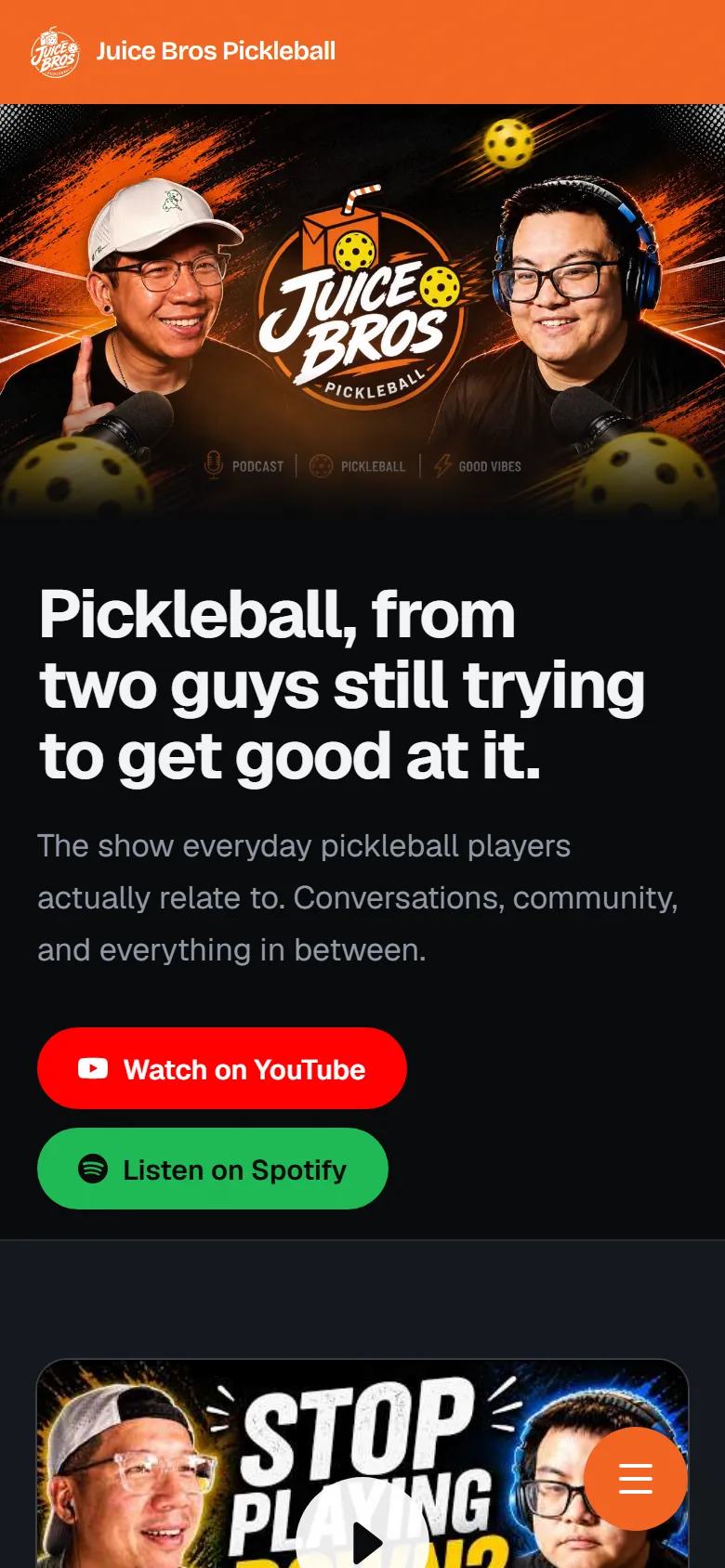
The Juice Bros home page on a phone: the hosts and logo, the same headline stacked over three lines, and the YouTube and Spotify buttons.
Phone width

Approach

The stack is Next.js App Router, TypeScript, Tailwind, shadcn/ui and Vercel. I modeled content as typed data, so the site can grow without a CMS.

I built the tools for my own play, and they live on the same site as the show.

Player tools

  • Booking Buddy

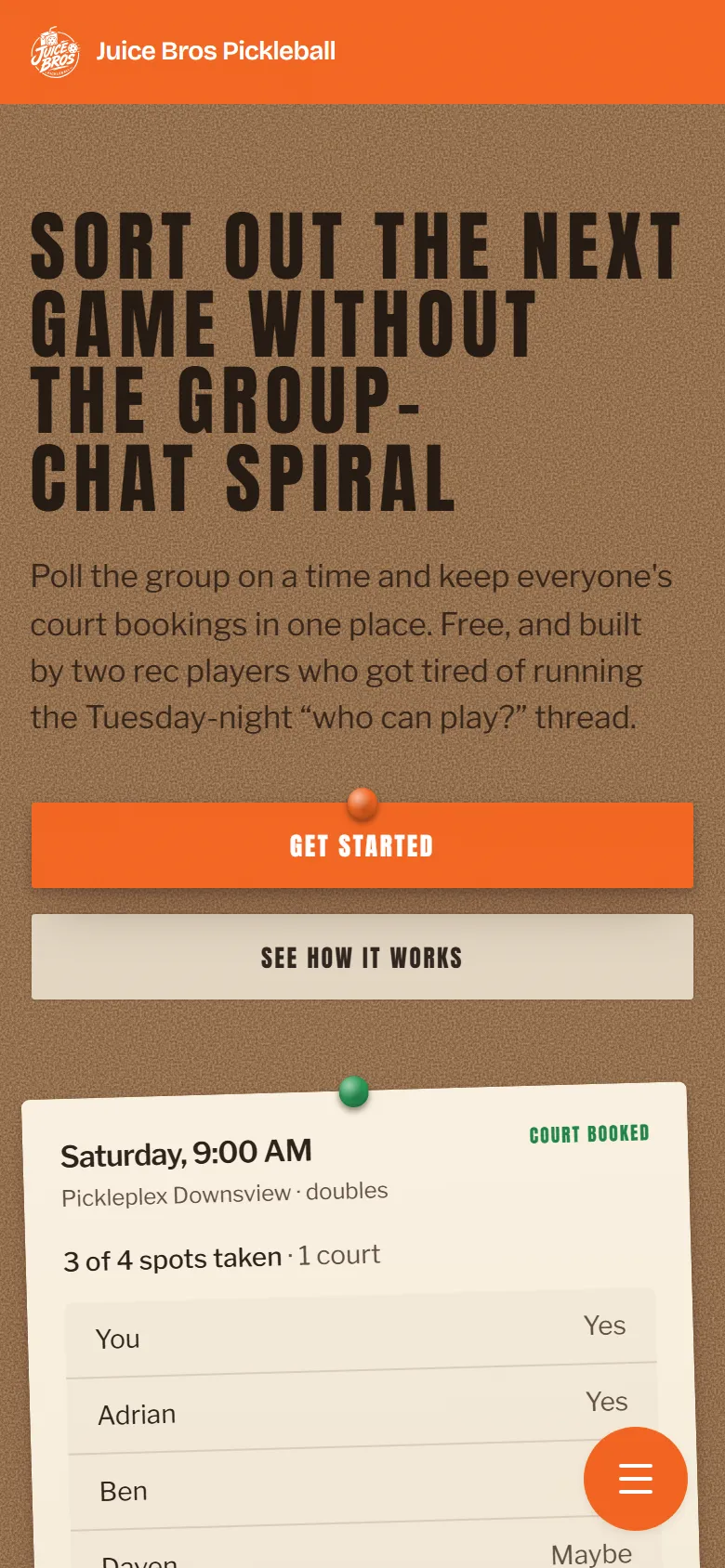
    Poll your group on a time, then keep everyone's court bookings in one place. Needs an account. These are its public entry screens.
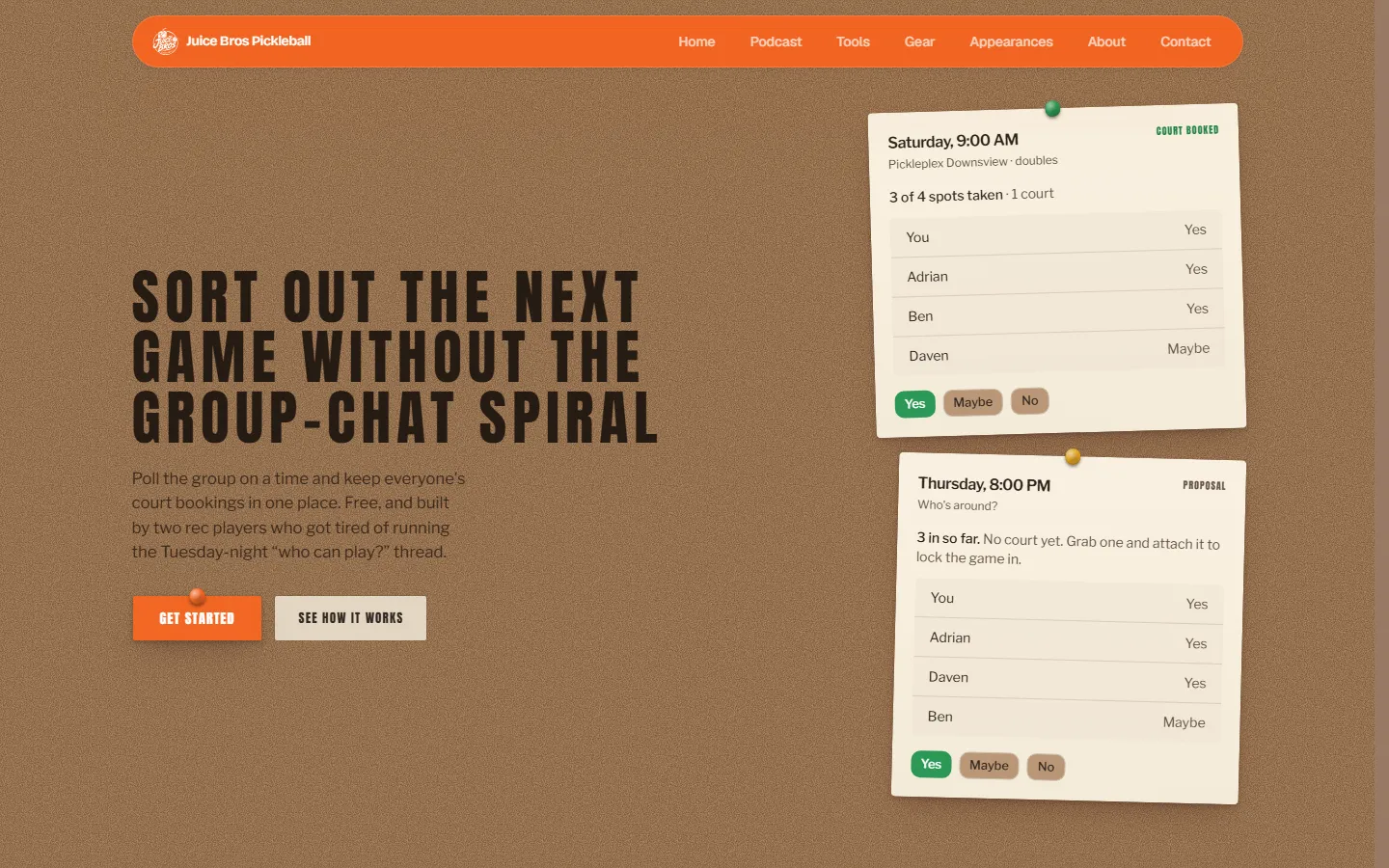
    Booking Buddy's public entry page on desktop: the headline 'Sort out the next game without the group-chat spiral' beside two pinned cards showing a booked Saturday court and a Thursday proposal, each with yes, maybe and no replies.
    Desktop width
    Booking Buddy's public entry page on a phone: the headline and a Get started button above a pinned booking card.
    Phone width

    Open Booking Buddy

  • Pickle Point Pal

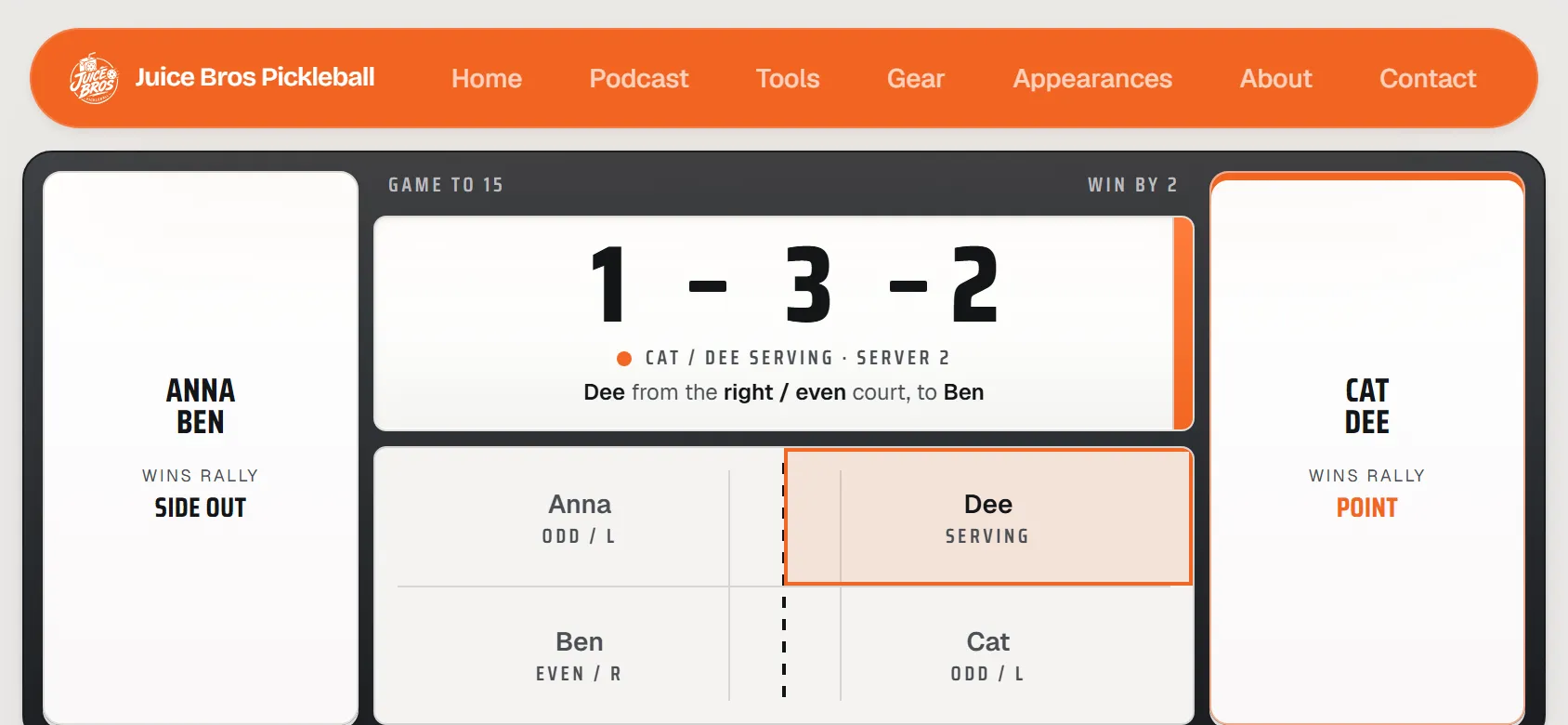
    Keep score and track serves like a referee: the three-number score call, server one or two, and side-outs, with every tap undoable. No sign-up. The phone view is held sideways, as it's meant to be.
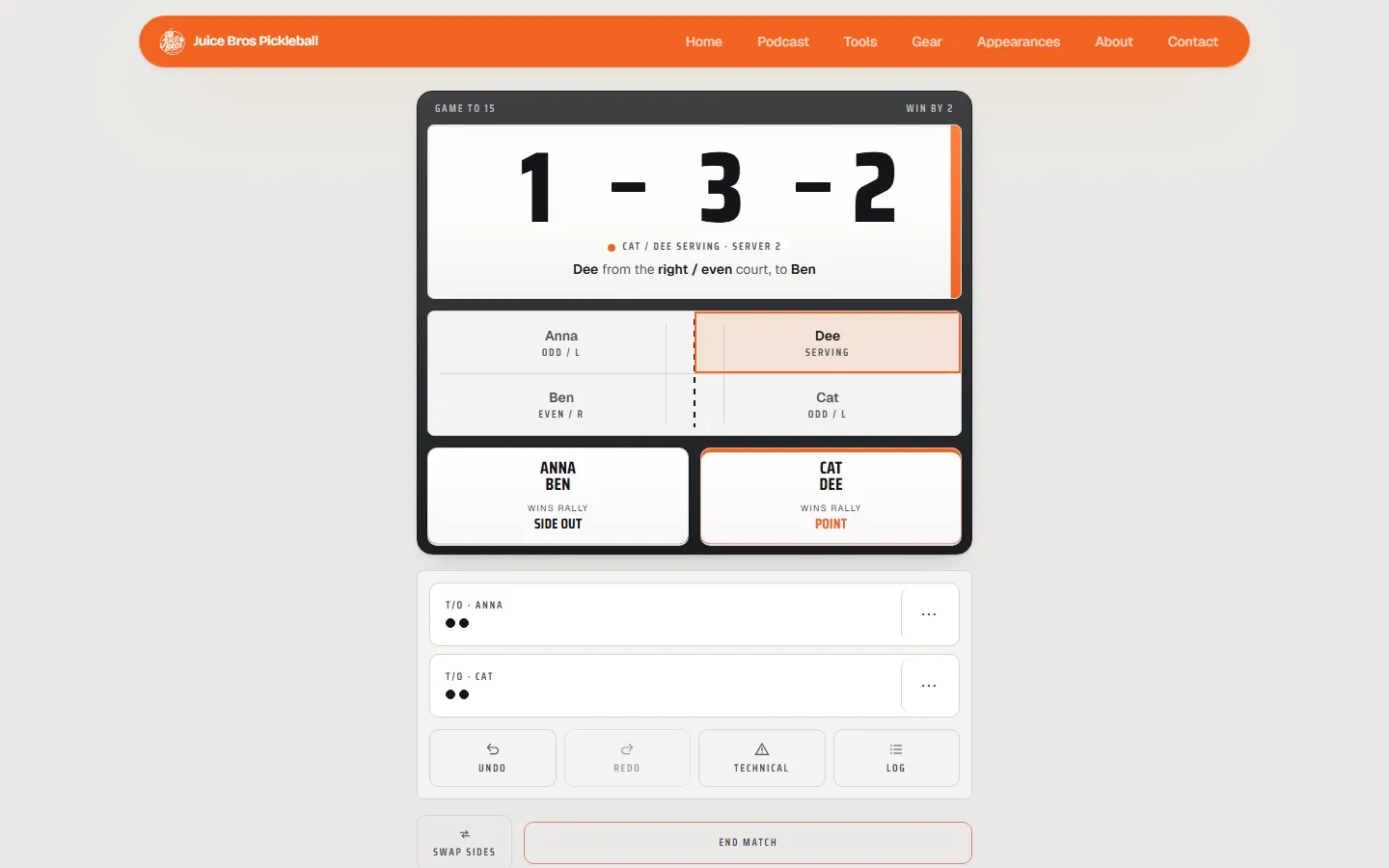
    Pickle Point Pal on desktop mid-match: the score called as 1-3-2, Cat and Dee serving, a court diagram with the server highlighted, and rally buttons for each team.
    Desktop width
    Pickle Point Pal on a phone held sideways: the score called as 1-3-2 in the centre, a court diagram below it, and a large rally button for each team on either side.
    Phone width

    Open Pickle Point Pal

  • Match Mixer

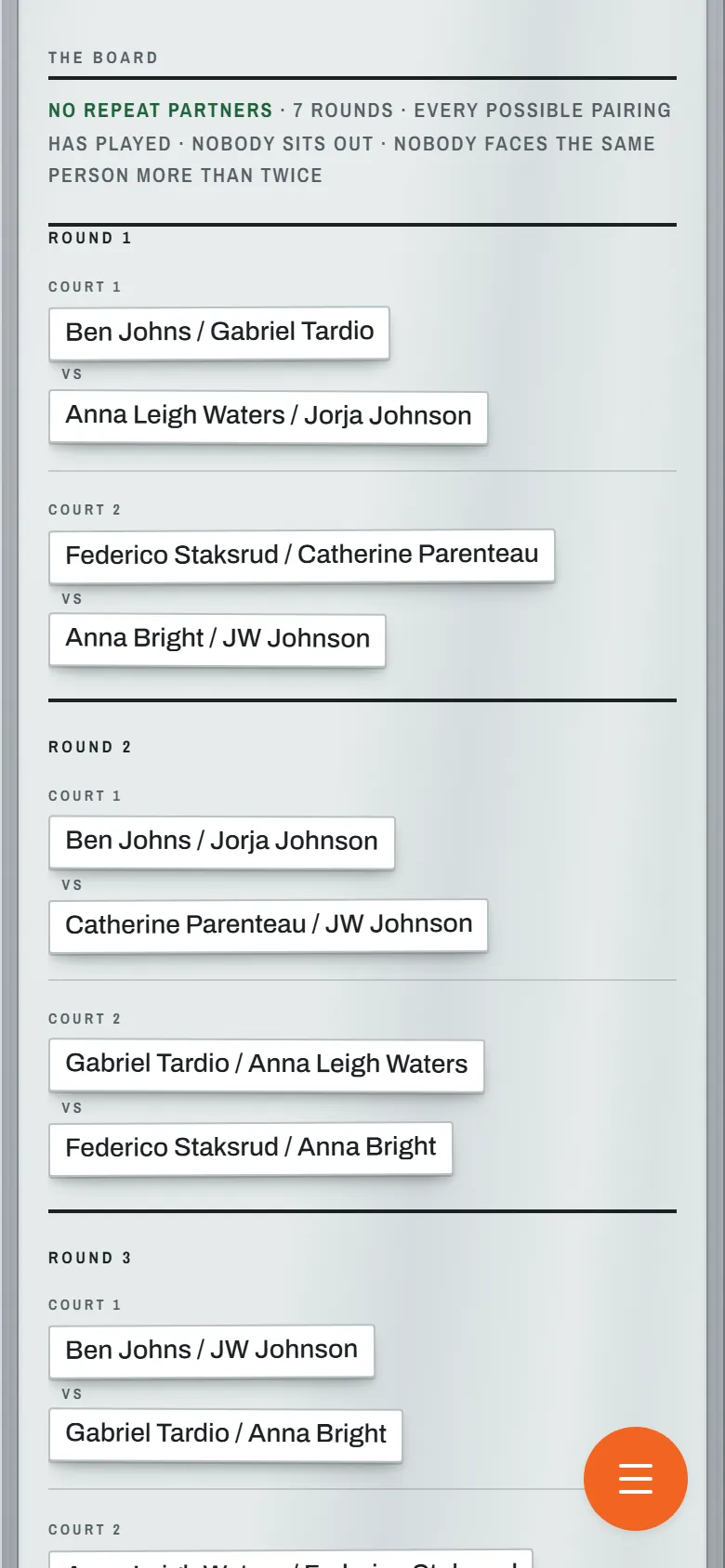
    Paste your player list and get a doubles round robin where nobody partners the same person twice. No sign-up, and nothing you type is kept on a server.
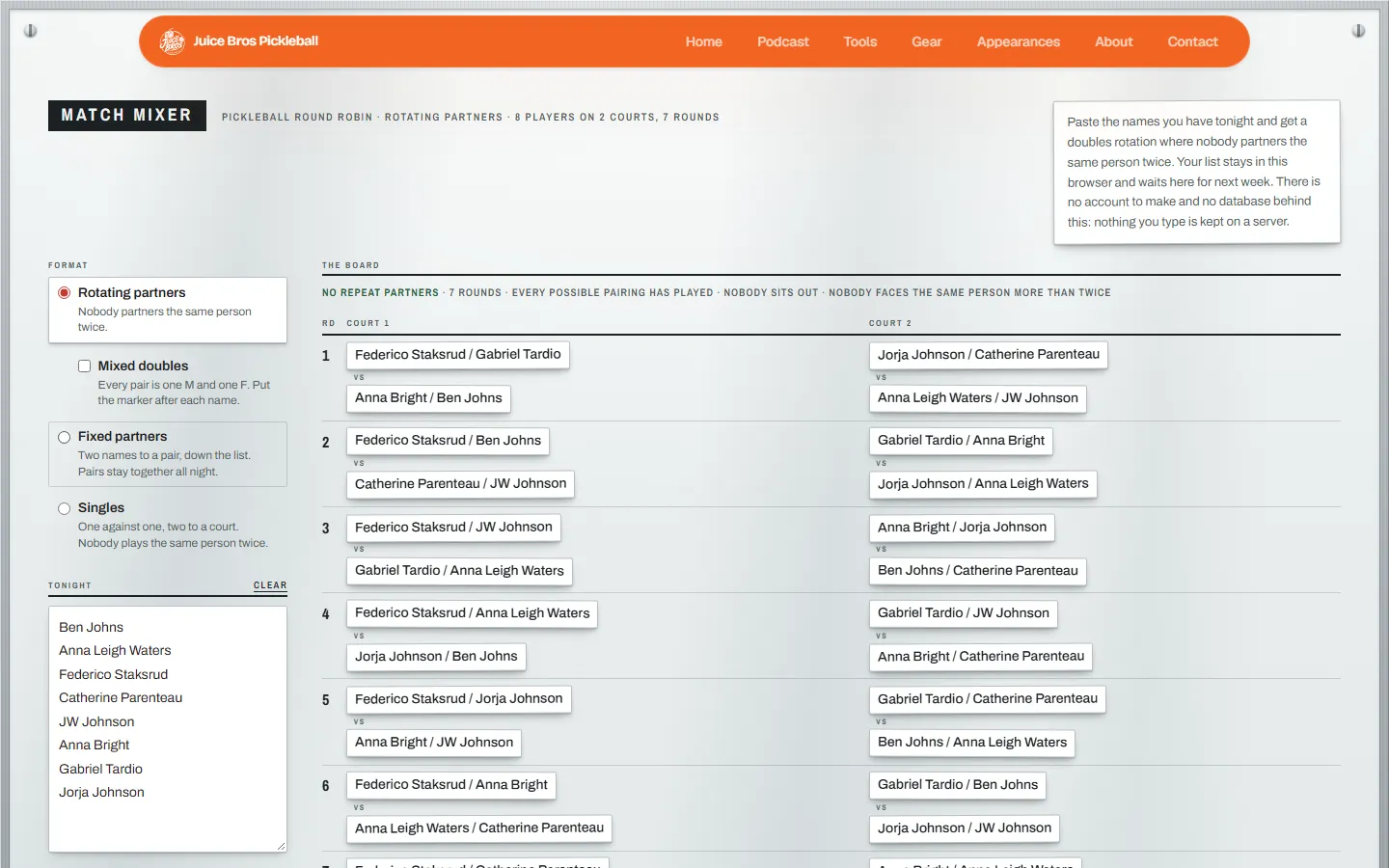
    Match Mixer on desktop: format options and an eight-name player list on the left, and a generated board of rounds with two courts per round on the right.
    Desktop width
    Match Mixer on a phone: the generated board listing each round and court as a pair of doubles teams.
    Phone width

    Open Match Mixer

  • On Deck

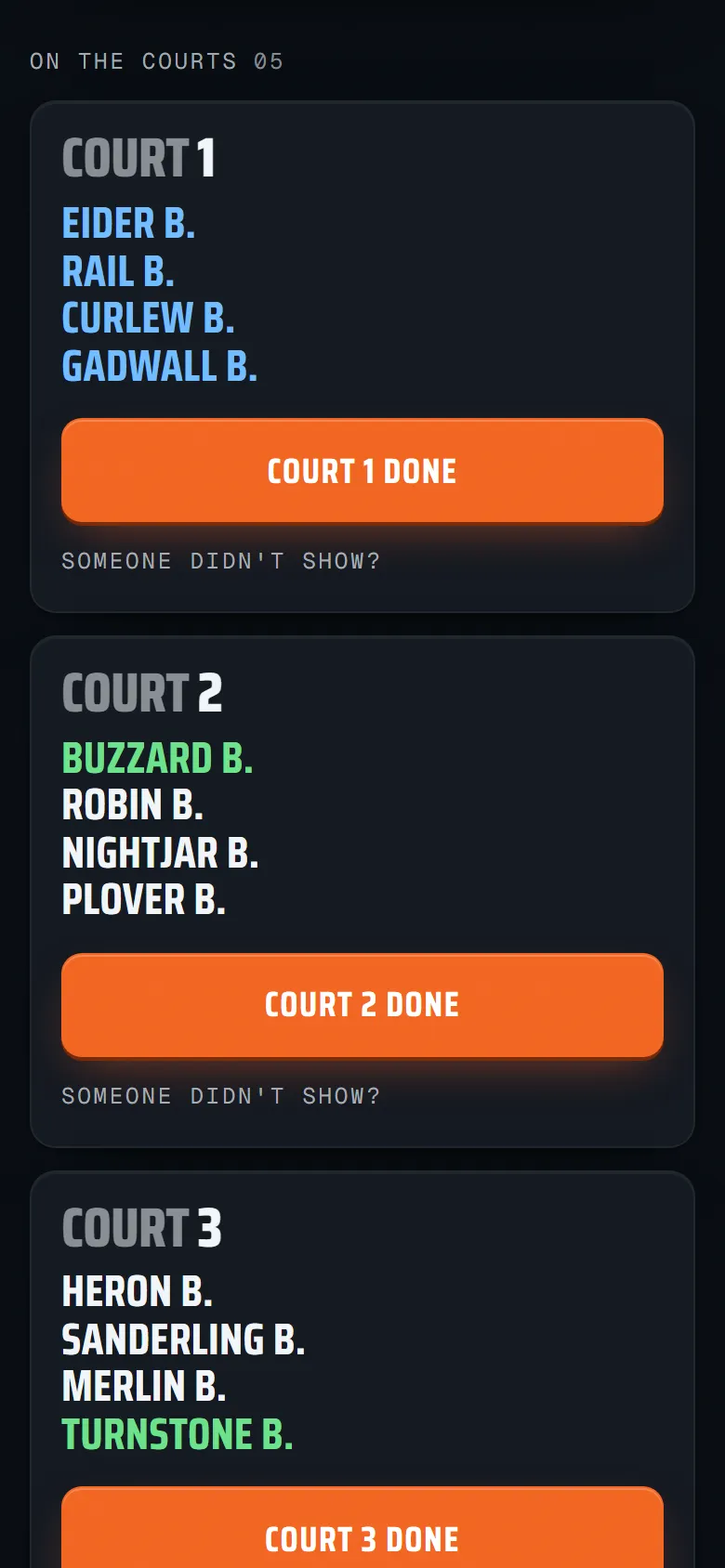
    Live court rotation for club socials: players scan a sign to join the queue, and it calls the next foursome as courts free up. Organizers need an account, players don't. These are from the demo night, which needs no sign-up.
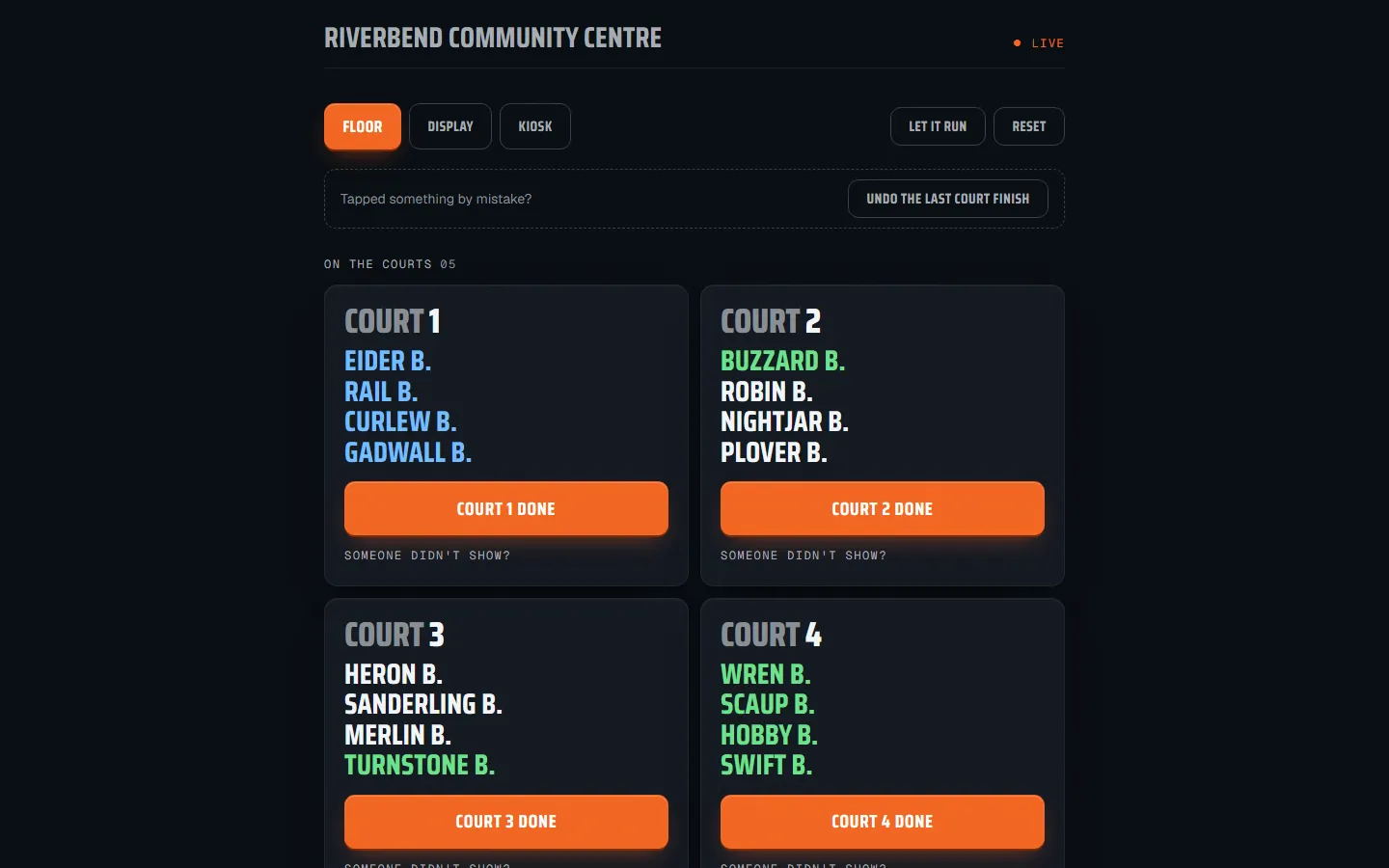
    On Deck's demo night on desktop: Floor, Display and Kiosk tabs above a grid of courts, each listing the four players on it with a Court done button.
    Desktop width
    On Deck's demo night on a phone: courts stacked one per row, each listing four players above a large Court done button.
    Phone width

    Open On Deck

  • Drum Roll

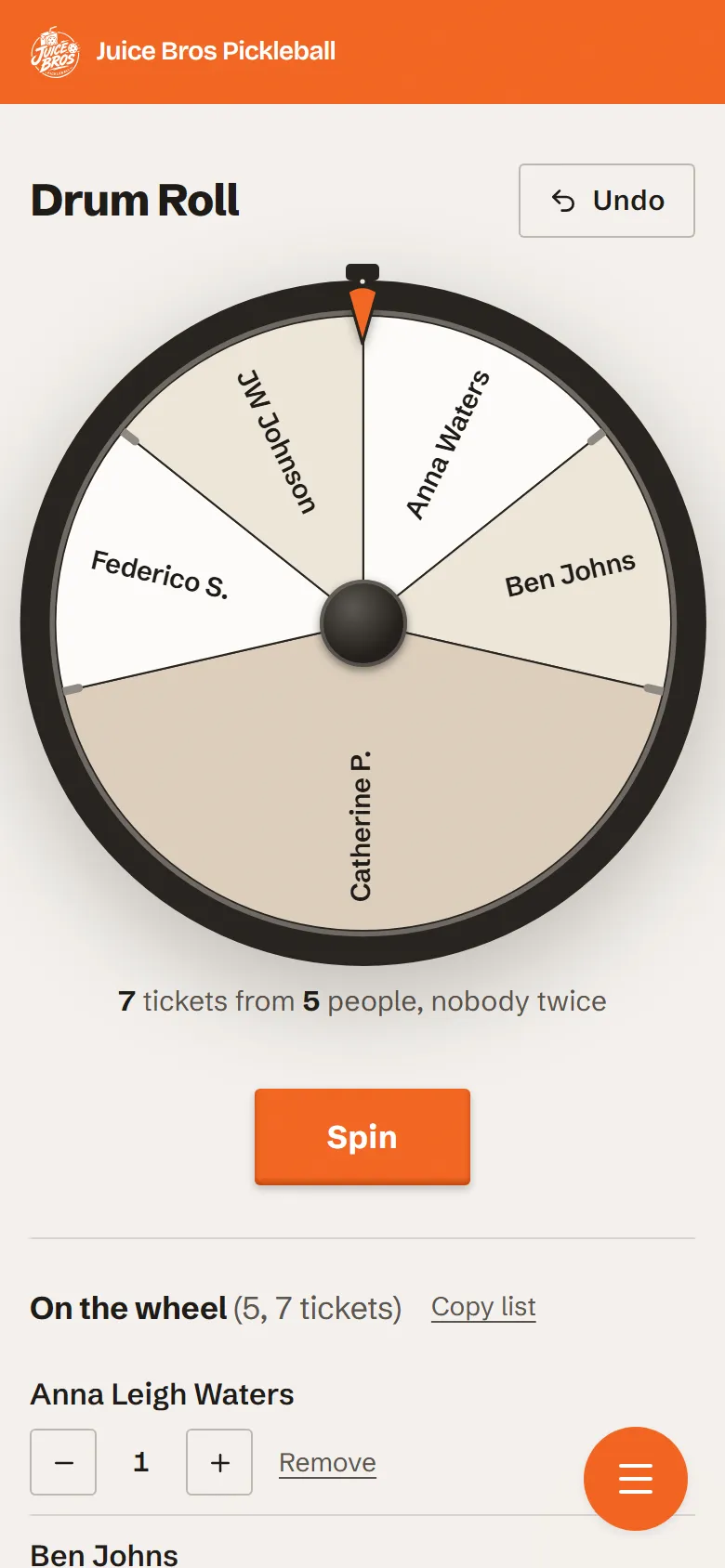
    Spin a wheel to pick a name, or add prizes and run the whole raffle. No paper tickets. No sign-up.
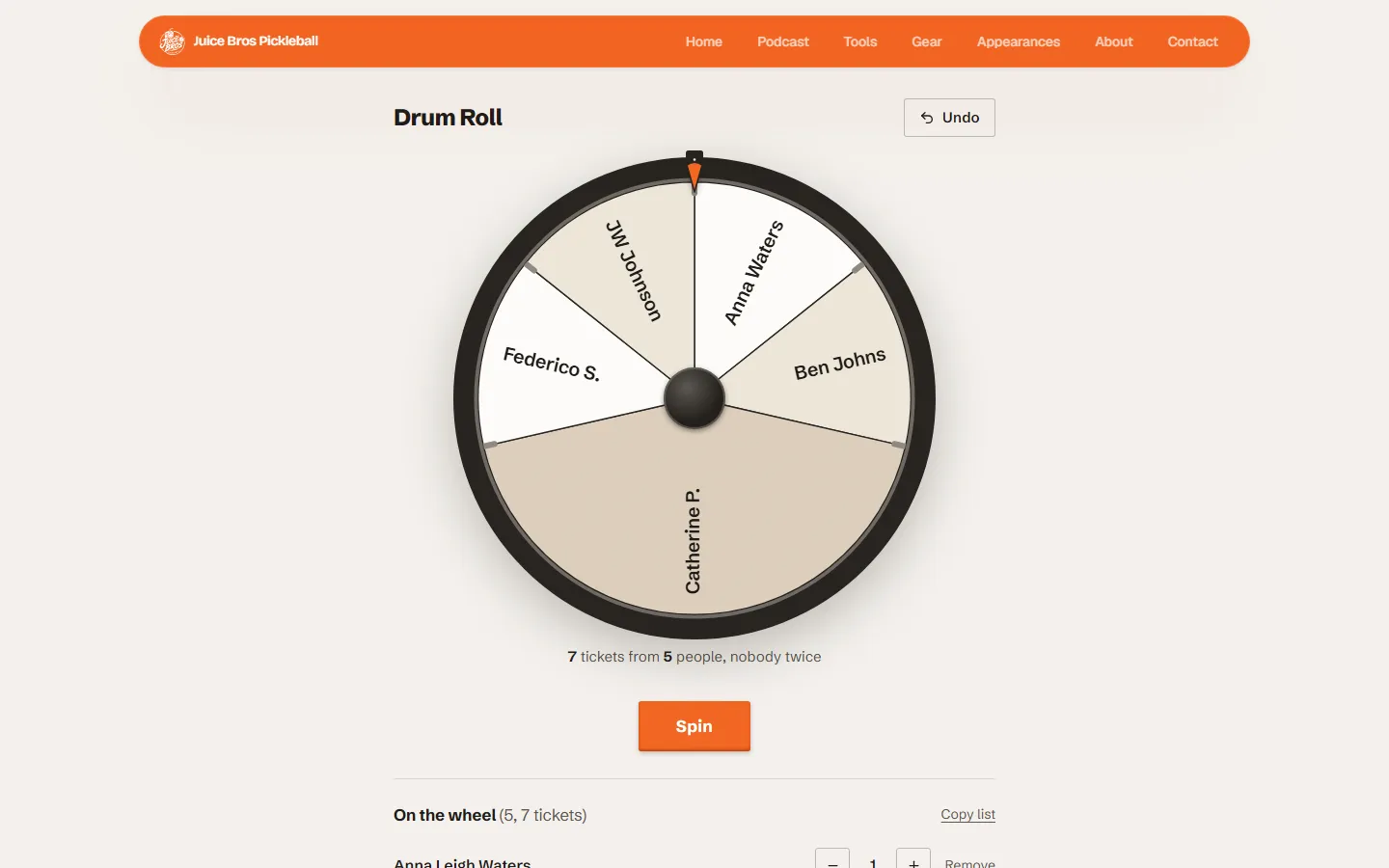
    Drum Roll on desktop: a wheel divided into five names, a Spin button beneath it and the On the wheel list starting below.
    Desktop width
    Drum Roll on a phone: a full-width wheel divided into five names, with a Spin button beneath it.
    Phone width

    Open Drum Roll

Outcome

Juice Bros is live. I built it, I run it, and I'm its only engineer. I built the Player tools for my own play.

The live site is the proof, and the source is public.